If you’ve ever stood at a bubble tea counter and spotted something dark and mysterious floating in a cup, there’s a good chance you were looking at grass jelly. It’s one of those toppings that stops first-timers in their tracks — jet black, slightly wobbly, and nothing like the tapioca pearls most people expect. But regulars? They swear by it. Grass jelly has been a staple in Southeast and East Asian dessert culture for generations, and it’s found a devoted following in the American bubble tea scene. Whether you’re curious about what it actually is, how it tastes, or why so many people choose it over classic boba, this guide covers everything you need to know about grass jelly bubble tea — from its origins to the best flavor pairings you can order today.
What Is Grass Jelly, Exactly?
Grass jelly (仙草, xiāncǎo in Mandarin) is a traditional Asian ingredient made from a plant called Platostoma palustre, a member of the mint family. Despite the name, it has nothing to do with lawn grass. The plant is dried, then boiled with starch — typically tapioca or rice starch — to create a thick liquid that sets into a firm, dark jelly once cooled.
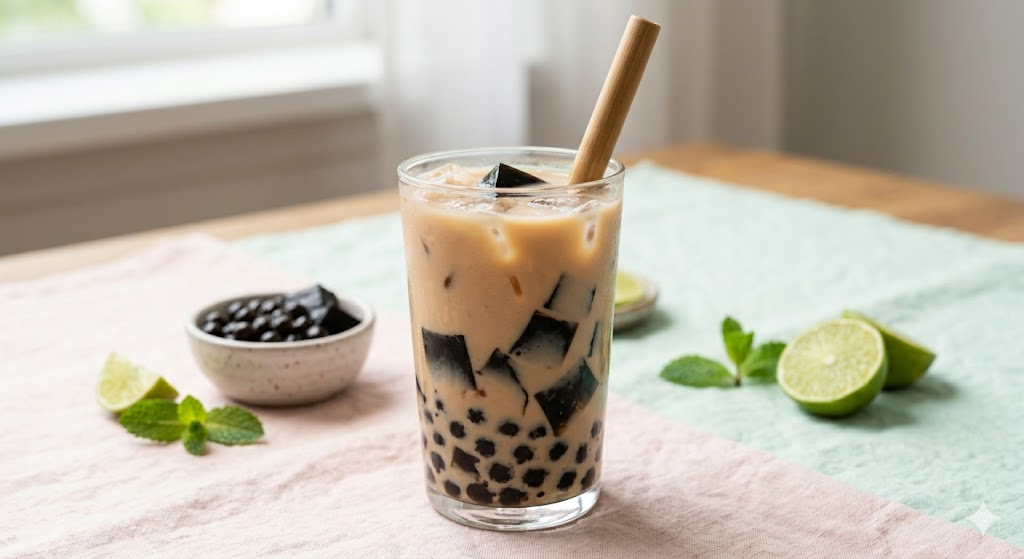
The result is a smooth, slightly firm block with a deep charcoal-black color and a mild, subtly bitter, herbal flavor. It’s often described as earthy and cooling, with a faint sweetness that makes it incredibly versatile in both sweet and savory applications.
A Quick History
Grass jelly has roots going back centuries in Chinese herbal medicine. It was traditionally consumed as a cooling food — in traditional Chinese medicine (TCM), certain foods are believed to reduce internal body heat, and grass jelly was one of them. Street vendors across Taiwan, Hong Kong, Malaysia, and Singapore have sold grass jelly desserts for decades, typically served cold with syrup or coconut milk. When bubble tea culture exploded globally in the 1990s and 2000s, grass jelly made the natural leap into the drink format. Today it’s a standard menu item at most serious boba shops across the United States.
How It Differs from Other Toppings
| Topping | Texture | Flavor | Color |
|---|---|---|---|
| Tapioca pearls | Chewy, dense | Neutral / sweet | Black or clear |
| Grass jelly | Firm, silky | Herbal, mildly bitter | Deep black |
| Lychee jelly | Soft, bouncy | Fruity, sweet | Clear / white |
| Coconut jelly | Tender | Mild, creamy | White |
Grass jelly sits in a unique spot — it has more structural integrity than most fruit jellies but isn’t as chewy as tapioca. That contrast is a big part of its appeal.
What Does Grass Jelly Taste Like?
This is the question everyone asks before their first sip. The honest answer: grass jelly has a mild, earthy, slightly bitter flavor that’s more background note than bold statement. On its own, it tastes faintly herbal — think of a very diluted, unsweetened herbal tea with a hint of bitterness at the finish.
In a bubble tea context, that subtle bitterness is actually a feature, not a bug. It cuts through the sweetness of milk teas and fruit teas in a way that feels refreshing and balanced. Many people who find classic boba too sweet specifically gravitate toward grass jelly because it tempers the sugar without overpowering the drink.
The Texture Factor
Texture is arguably more important than flavor when it comes to grass jelly. It’s typically cut into small cubes or strips and has a smooth, slightly slippery surface with a firm but yielding bite. It doesn’t bounce back like tapioca — it gives cleanly, almost like a very firm tofu or a dense panna cotta.
That clean bite is satisfying in a different way than chewy pearls. Some people find the chewiness of tapioca tiring over a full drink; grass jelly offers a lighter, more refreshing alternative.
The Best Bubble Tea Flavors to Pair with Grass Jelly
Not every bubble tea flavor plays equally well with grass jelly’s herbal notes. Here are the pairings that work best:
Milk Tea Pairings
– Classic milk tea — The creamy, tannin-forward base is a natural match. The bitterness in both the tea and the jelly complement each other without competing.
– Taro milk tea — Taro’s earthy sweetness and purple hue create a visually striking and flavor-balanced combination with grass jelly.
– Brown sugar milk tea — The caramel depth of brown sugar syrup plays beautifully against the herbal edge of the jelly.
– Matcha milk tea — Two earthy, slightly bitter ingredients that reinforce each other. A favorite among matcha enthusiasts.
Fruit Tea Pairings
– Passion fruit tea — The bright acidity cuts through the jelly’s earthiness for a lively, refreshing drink.
– Lychee green tea — Floral and light, this pairing lets the grass jelly’s subtle flavor shine without being buried.
– Mango tea — A crowd-pleaser. The tropical sweetness of mango balances the jelly’s bitterness perfectly.
What to Avoid
Very light, delicate flavors — like plain jasmine tea or white peach — can get overwhelmed by grass jelly’s herbal presence. If you’re working with subtle base flavors, consider a smaller portion of jelly or pair it with a different topping.
Nutritional Profile and Health Considerations
One reason grass jelly has maintained its popularity beyond just taste is its reputation as a relatively low-calorie topping. Compared to tapioca pearls, which are almost entirely starch and can add 100–150 calories to a drink, grass jelly is significantly lighter.
Approximate Nutritional Values (per 100g serving)
– Calories: 50–70 kcal
– Carbohydrates: 12–16g
– Protein: 0–1g
– Fat: 0g
– Fiber: minimal
These numbers vary depending on whether the jelly is served plain or pre-sweetened with syrup, which is common at many shops. Always ask your barista whether the grass jelly has added sugar if you’re watching your intake.
Traditional Health Claims
In TCM tradition, grass jelly is considered a “cooling” food believed to help with:
– Reducing body heat and inflammation
– Supporting digestion
– Providing mild antioxidant benefits from the plant’s polyphenols Modern nutritional science hasn’t fully validated these traditional claims, but the ingredient does contain some naturally occurring antioxidants from the Platostoma palustre plant. It’s not a superfood, but it’s a genuinely lighter option compared to most boba toppings.
Note: If you have specific dietary concerns or health conditions, consult a healthcare professional rather than relying on traditional food classifications.
How Grass Jelly Bubble Tea Is Made
Making grass jelly bubble tea at home is more approachable than most people expect. The jelly itself can be purchased pre-made at most Asian grocery stores — look for it canned or in vacuum-sealed blocks in the refrigerated section.
Basic Method
1. Prepare the grass jelly — If using canned jelly, drain and rinse it. Cut into small cubes (roughly 1cm) or thin strips.
2. Brew your tea base — Steep black tea, green tea, or oolong for 4–5 minutes. Let it cool completely.
3. Make the milk tea — Combine cooled tea with your choice of milk (whole milk, oat milk, or condensed milk for a richer result) at roughly a 2:1 tea-to-milk ratio.
4. Sweeten to taste — Simple syrup, brown sugar syrup, or honey all work well. Start with 1–2 tablespoons and adjust.
5. Assemble — Add grass jelly cubes to the bottom of a glass, fill with ice, then pour the milk tea over the top.
6. Serve immediately — Grass jelly softens over time, so drink it fresh for the best texture.
Tips for Better Results
– Don’t over-sweeten — The jelly’s herbal bitterness is part of the experience. Heavy sweetness masks it.
– Use full-fat milk or oat milk — The creaminess balances the jelly’s firm texture better than skim or water-based alternatives.
– Chill everything — Grass jelly served at room temperature loses some of its refreshing quality. Keep it cold until serving.
Where to Find Grass Jelly Bubble Tea in the US
Grass jelly bubble tea is widely available at dedicated boba shops across the United States, particularly in cities with large Asian-American communities. Chains like Gong Cha, Tiger Sugar, Kung Fu Tea, and Boba Guys typically carry it as a standard topping option.
If you’re in a smaller market without a dedicated boba shop nearby, many Asian grocery stores — including H Mart, 99 Ranch Market, and Mitsuwa — carry pre-made grass jelly that you can use to make drinks at home.
Online retailers also stock it in canned and dried form.
What to Ask For
When ordering, you can simply ask for “grass jelly” as a topping — most shops will know exactly what you mean. Some menus list it as “xiancao jelly” or “herb jelly”. If you’re unsure, show the staff the Chinese characters (仙草) and you’ll get there quickly.
Expect to pay a small upcharge — typically $0.50 to $1.00 — for the topping, which is standard across most boba shops.
Why Grass Jelly Has Earned Its Loyal Following
At the end of the day, grass jelly bubble tea endures because it delivers something genuinely different from the standard boba experience. It’s lighter, more nuanced, and carries a cultural depth that connects it to centuries of Asian culinary tradition. For people who find tapioca pearls too heavy or too sweet, it’s a revelation. For longtime boba fans, it’s a reliable go-to that never gets old.
The growing interest in diverse textures and lower-sugar options in the American food scene has only accelerated grass jelly’s rise. As bubble tea menus continue to expand and customers become more adventurous, grass jelly sits comfortably as one of the most rewarding toppings you can choose — whether you’re a first-timer or a seasoned regular.
Frequently Asked Questions
Is grass jelly the same as black jelly?
They’re often the same thing. Grass jelly is frequently called “black jelly” in bubble tea shops because of its deep charcoal color. However, some shops use the term “black jelly” for other dark-colored jellies made from different ingredients, so it’s worth confirming with staff if you’re specifically looking for the herbal variety.
Is grass jelly vegan?
Yes, grass jelly is vegan. It’s made entirely from plant-based ingredients — the dried Platostoma palustre herb and starch. There are no animal-derived ingredients in traditional grass jelly. Just double-check that the shop hasn’t added any non-vegan sweeteners or toppings alongside it.
Does grass jelly taste like licorice or anise?
No. Despite being herbal, grass jelly doesn’t taste like licorice or anise. Its flavor is more earthy and mildly bitter — closer to a very diluted, unsweetened herbal tea. Most people find it far more subtle than they expect.
Can I eat grass jelly if I’m diabetic or watching my sugar intake?
Plain grass jelly is relatively low in sugar and calories, making it one of the better topping choices for people monitoring their intake. However, many shops serve it pre-sweetened or with added syrup. Always ask whether the jelly has added sugar, and request your drink with reduced sweetness to keep the overall sugar content in check.
How long does grass jelly last in the fridge?
Once opened or cut, grass jelly should be stored in an airtight container submerged in water in the refrigerator. It typically stays fresh for 3–5 days. The texture will gradually soften over time, so it’s best consumed within the first day or two for optimal firmness. Canned grass jelly that hasn’t been opened can last much longer — check the expiration date on the packaging.