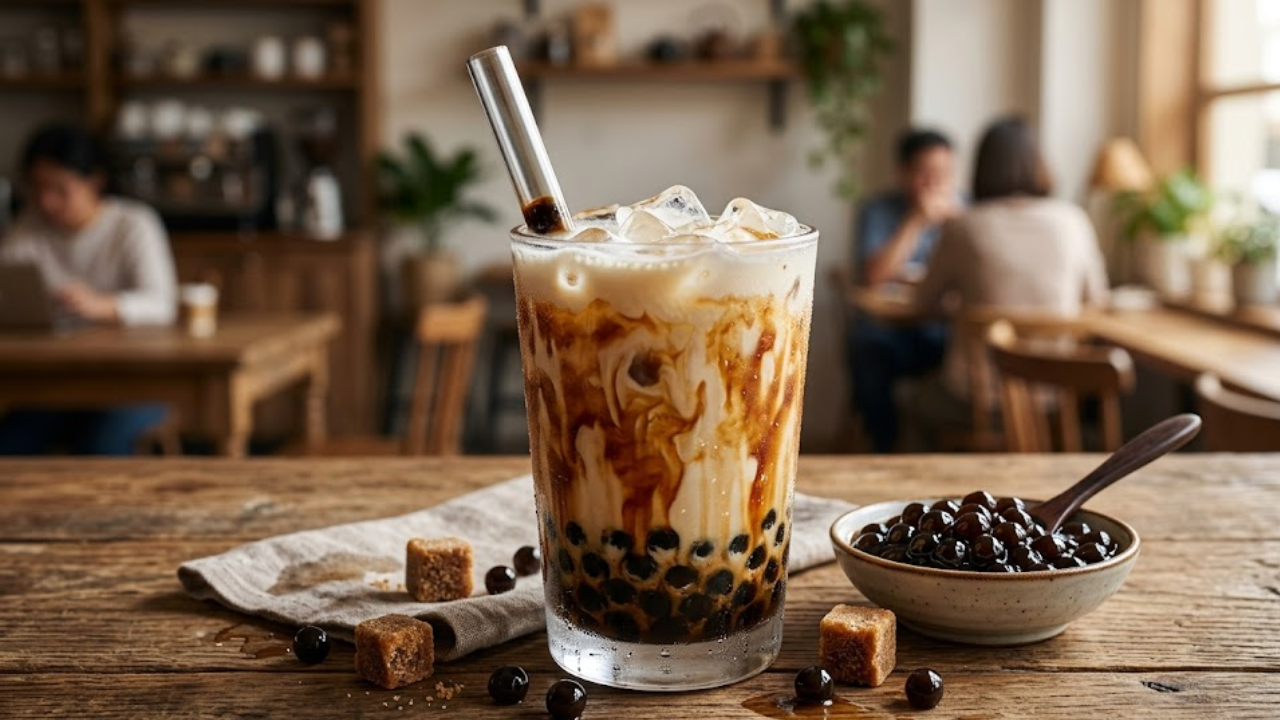
Walk down almost any major city street, and you will spot someone holding a clear cup filled with a creamy beverage, dark syrup streaks, and a layer of chewy pearls at the bottom. Bubble tea has completely transformed the global beverage landscape. Among the countless flavors available, the brown sugar boba variety stands out as a massive crowd favorite.
Making this cafe-style beverage in your own kitchen might feel intimidating at first glance. The distinct caramel-like tiger stripes and perfectly chewy tapioca pearls require specific techniques. However, crafting a delicious cup of brown sugar bubble tea at home is actually highly achievable.
This comprehensive guide covers everything you need to know about brewing the perfect cup. You will learn the exact methods for cooking flawless boba, creating rich syrup, and customizing the drink to fit your exact taste preferences.
The History and Cultural Significance of Bubble Tea
Origins in Taiwan
The story of bubble tea begins in Taiwan during the 1980s. Tea stands were already a popular staple across the island, serving frothy, shaken tea drinks. Shop owners eventually decided to experiment by dropping chewy tapioca pearls into iced milk tea. The combination of refreshing, sweet tea and a satisfyingly chewy snack created an instant hit. The drink became affectionately known as boba tea or pearl milk tea.
Global Spread and Adaptation
During the 1990s and early 2000s, bubble tea expanded far beyond Taiwan’s borders. It reached neighboring Asian countries before eventually making a massive impact in North America and Europe. As the drink traveled, local cultures adapted the recipes. Menus expanded to include fruit slushes, taro milk, and matcha blends. Today, you can find a boba shop in nearly every major international neighborhood.
The Unique Appeal of Brown Sugar Bubble Tea
While fruit teas and classic milk teas remain popular, the brown sugar variation introduced a whole new level of visual and culinary appeal. This specific style often relies heavily on the rich, deep notes of toffee and caramel found in dark sugars. Aesthetically, the thick syrup clings to the inside of the cup, creating beautiful streaks that resemble tiger stripes. When mixed with creamy milk, it offers a deeply satisfying, dessert-like experience.
Deconstructing Brown Sugar Bubble Tea: Key Components
Tapioca Pearls (Boba)
The essential ingredient of any boba drink is the tapioca pearl. Made from tapioca starch extracted from the cassava root, these small spheres provide the signature chewiness known as the “Q” texture in Taiwanese food culture.
Achieving the perfect chewiness requires precision. You must boil the pearls rapidly, then simmer them gently to cook the insides without turning the outsides to mush. After cooking, letting them rest in hot water is a critical step to finalize their soft, bouncy texture. Finally, infusing them with brown sugar syrup gives them a sweet flavor that permeates every bite.
Brown Sugar Syrup
The syrup acts as the primary sweetening agent and visual focal point of the drink. Using the correct type of sugar makes a massive difference. Dark brown sugar, muscovado, or palm sugar (gula melaka) will yield a much deeper caramel flavor compared to light brown sugar.
Simmering the syrup to perfection involves a precise 2:1 ratio of sugar to water. Boiling this mixture down creates a thick, viscous consistency. This thick texture is exactly what allows the syrup to coat the sides of your glass, achieving that famous tiger stripe effect.
Tea Base
While some modern brown sugar drinks omit tea entirely in favor of plain milk, a traditional bubble tea requires a strong tea base to balance the sweetness.
- Black tea: The classic choice. It requires hot water around 203°F (95°C) to properly extract its bold, robust flavors.
- Oolong tea: Offers a complex, roasted, and sometimes floral profile. It steeps best at 185–205°F (85–96°C).
- Green tea: A lighter, grassier option that pairs well with fruit flavors.
You can use standard hot brewing methods and chill the tea, or use a cold brew method by soaking the leaves in cold water overnight in the refrigerator.
Milk Component
The milk ties the tea and the syrup together. Standard whole milk provides a rich, creamy mouthfeel that mimics professional boba shops.
If you prefer non-dairy options, oat milk is currently a top choice because of its neutral flavor and thick texture. Soy milk and almond milk also work well. For an extra luxurious touch, you can froth a small amount of heavy cream to float on top of your finished beverage.
Step-by-Step Classic Brown Sugar Boba Tea Recipe
Follow these precise instructions to create two servings of delicious brown sugar bubble tea.
Ingredients List
- 1/2 cup quick-cooking tapioca pearls (boba)
- 4 cups water (for boiling boba)
- 1 cup dark brown sugar or muscovado sugar
- 1/2 cup water (for the syrup)
- 2 black tea bags (or 2 tablespoons loose leaf black tea)
- 1.5 cups hot water (for brewing tea)
- 1.5 cups whole milk (or preferred alternative)
- Ice cubes
Cooking the Boba
Bring the 4 cups of water to a rolling boil in a medium pot. Carefully pour in the tapioca pearls. Stir them gently so they do not stick to the bottom. Once the pearls float to the surface, cover the pot and reduce the heat to medium-low. Simmer for 15 minutes. Turn off the heat, keep the pot covered, and let the pearls rest in the hot water for another 15 minutes. Drain the pearls and rinse them briefly under cold water.
Making the Brown Sugar Syrup
In a small saucepan, combine the 1 cup of dark brown sugar and 1/2 cup of water. Place the pan over medium heat. Do not stir the mixture, as stirring encourages sugar crystals to form. Let the mixture come to a gentle simmer. Continue to simmer for about 5 minutes until the liquid thickens slightly. It should coat the back of a spoon. Remove the pan from the heat. Carefully transfer your cooked boba into the warm syrup to let them soak and absorb the sweetness.
Brewing the Tea
Steep the black tea bags in 1.5 cups of hot water (around 200°F) for 5 minutes. You want the tea to be quite strong so it stands up to the milk and ice. Remove the tea bags and let the liquid cool completely. You can place it in the refrigerator to speed up this process.
Assembly and Presentation
Take a tall glass and scoop a generous portion of the warm boba and syrup into the bottom. Tilt the glass at a 45-degree angle and slowly rotate it. The thick syrup will drip down the sides, creating tiger stripes. Fill the glass halfway with ice cubes. Pour in the cooled black tea, filling the glass about halfway up. Top off the rest of the glass with your milk. Insert a wide boba straw, stir to mix the syrup, and enjoy.
Variations and Customizations
Different Tea Bases
You can easily swap the black tea for other varieties to change the flavor profile. Matcha powder dissolved in water provides an earthy, vibrant green base. A strongly brewed spiced chai bag adds warmth and complexity to the caramel notes of the syrup.
Milk Alternatives
If you are lactose intolerant or simply prefer a different taste, milk alternatives work beautifully. Oat milk is exceptionally creamy and complements the brown sugar well. Coconut milk adds a tropical twist, while soy milk provides a traditional Asian flavor profile often found in Taiwanese cafes.
Flavor Additions
You can elevate your syrup by adding aromatics during the boiling process. Add half a teaspoon of vanilla extract once you remove the syrup from the heat. Alternatively, drop a cinnamon stick or a slice of fresh ginger into the simmering sugar water for a subtle, spiced kick.
Toppings and Mix-Ins
Tapioca pearls are just the beginning. You can add chunks of herbal grass jelly, which offers a slight bitterness to contrast the sweet syrup. Egg pudding provides a soft, custardy texture. Sweetened red beans are another highly traditional topping that adds fiber and an earthy sweetness.
Adult Versions
For a fun twist at a dinner party, you can infuse your bubble tea with alcohol. A splash of Baileys Irish Cream or coffee liqueur blends seamlessly with the milk and brown sugar. Alternatively, a shot of dark rum highlights the molasses notes in the syrup.
Troubleshooting Common Problems
Boba Too Hard or Mushy
If your pearls have a hard, chalky center, they need more cooking time. You must ensure you bring the water back to a boil after dropping them in, and do not skip the resting phase. If your pearls are mushy and falling apart, you either boiled them too vigorously for too long or left them sitting in the water for hours. Quick-cooking boba generally only needs 15 minutes of boiling and 15 minutes of resting.
Syrup Too Thin or Thick
A watery syrup will not form stripes on your glass; it will just blend immediately into the milk. To fix this, simmer the syrup for a few more minutes to evaporate more water. Conversely, if your syrup turns into hard candy when it cools, you cooked it for too long. You can rescue it by adding a splash of hot water and gently reheating the pan until it loosens up.
Tea Too Bitter or Weak
A weak tea will get entirely lost behind the milk and sugar. Use more tea bags or steep for a longer duration to fix this. However, if your tea tastes aggressively bitter or astringent, you likely used water that was too hot (especially a problem for green tea) or you squeezed the tea bags when removing them.
Preventing Crystallization
Sometimes, brown sugar syrup becomes gritty as it cools. To prevent sugar crystallization, absolutely avoid stirring the syrup once it starts boiling. If you are highly prone to this issue, adding half a teaspoon of lemon juice or a small drop of corn syrup to the pot before heating can help stabilize the sugars.
Health and Dietary Considerations
Sugar Content
Brown sugar bubble tea is inherently a sweet treat. A standard cafe serving can contain over 40 grams of sugar. To reduce the sweetness at home, simply use less syrup in your glass. You can also brew your tea entirely unsweetened, relying solely on the soaked boba pearls to provide a mild sweetness.
Calorie Awareness
Tapioca pearls are pure starch and carbohydrate. When combined with whole milk and heavy syrup, a single drink can range from 300 to 500 calories. Treating this beverage as an occasional dessert rather than a daily hydration source is a smart approach for calorie awareness.
Gluten-Free and Vegan Options
Fortunately, tapioca pearls are naturally gluten-free because cassava root contains no wheat. To make the entire drink vegan, simply substitute the dairy milk with a plant-based alternative. Always double-check your specific brand of boba packaging to ensure no wheat flour was used in the manufacturing facility.
Master Your Homemade Boba Experience
Crafting a brown sugar bubble tea at home allows you complete control over your ingredients, sweetness levels, and flavor combinations. Once you master the basic techniques of boiling the pearls and reducing the syrup, you can rival the quality of any commercial boba shop. Gather your ingredients, start brewing your tea, and begin experimenting with your own perfect cup today.